Real Madrid vs AC Milan
Two European dynasties, two footballing philosophies, one stage that demands perfection.

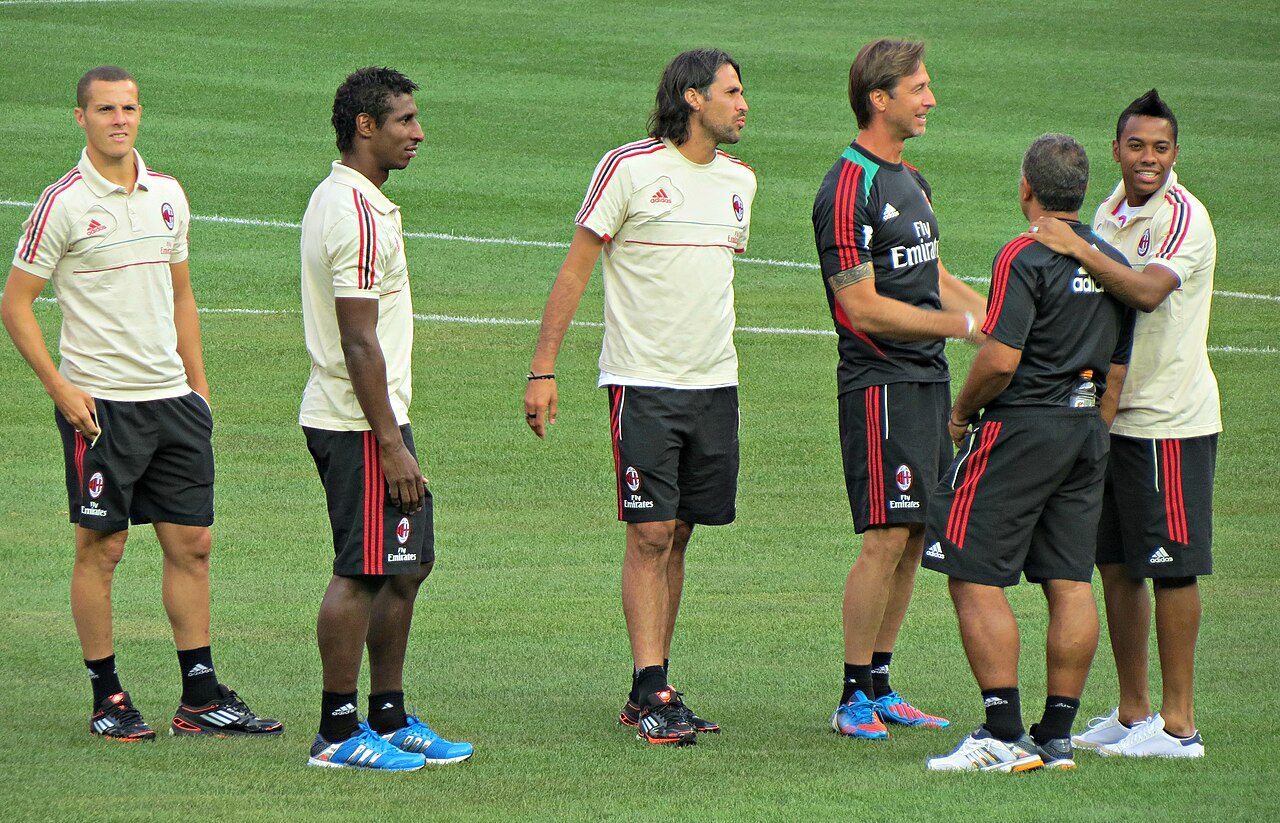
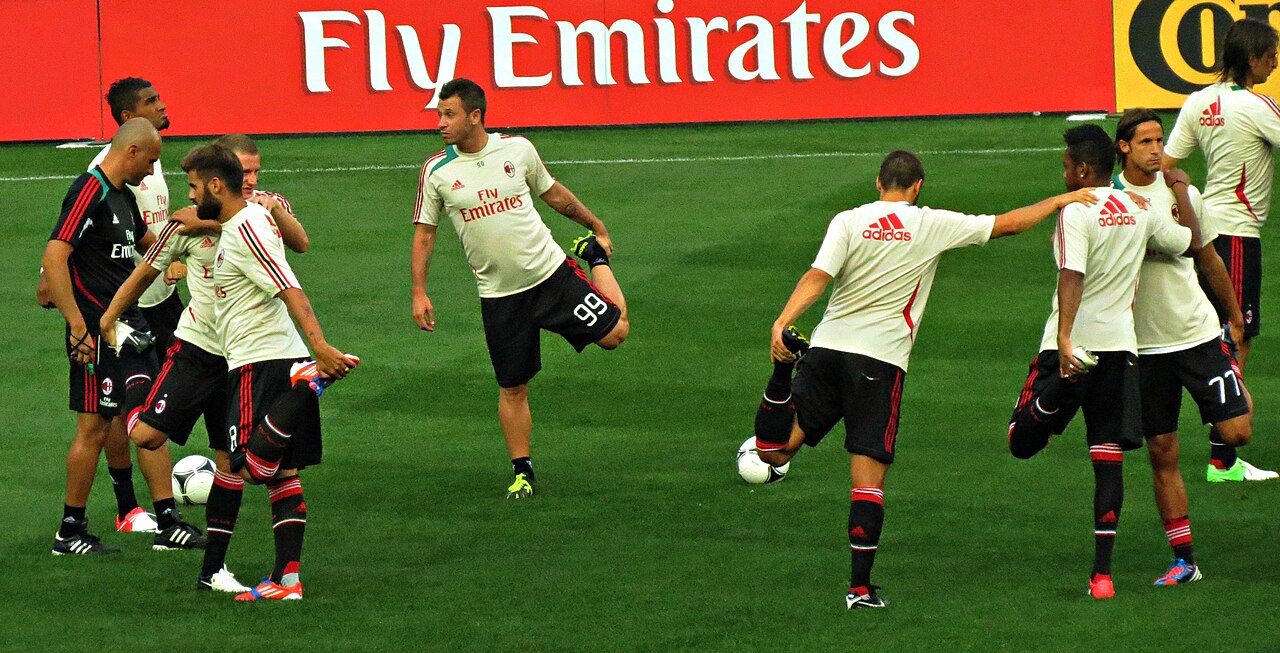
goatling · CC BY-SA 2.0
Real Madrid versus AC Milan is one of the most storied rivalries in UEFA Champions League history, pitting Spain's most decorated club against Italy's most successful in the competition. Both sides carry the weight of national footballing identity — Madrid as the embodiment of La Liga's European dominance, Milan as the standard-bearer of Serie A's tactical tradition. Their meetings in the European Cup and Champions League have produced some of the most electric nights in the competition's history, blending individual brilliance with collective discipline in a clash that transcends a single match. This rivalry is not defined by a single season but by a recurring pattern: two clubs at the absolute peak of their respective domestic leagues, meeting in the knockout stages or finals, each bringing a different footballing philosophy to the pitch. The encounters have featured generational talents on both sides, from the golden eras of the 1990s and 2000s, and have consistently delivered drama, tactical chess, and moments that fans still recount decades later.
- Most famous UCL meeting
- 2003 Final, Old Trafford, Manchester — AC Milan 0-0 Juventus (Milan won 3-2 on penalties)
- 2003 Final Milan scorers
- N/A (no goals scored in regulation or extra time)
- 2003 Final Madrid scorers
- N/A (Real Madrid did not participate in the 2003 final)
Lore & Background
The Real Madrid–AC Milan rivalry lives at the intersection of two footballing cultures that have shaped European football for decades. Madrid's identity is built on individual genius, attacking audacity, and an unshakeable belief in their own superiority on the European stage — a self-confidence forged over fifteen Champions League triumphs. Milan, by contrast, has historically embodied the Italian school: positional discipline, defensive architecture, and the surgical finishing of a well-oiled attacking unit. When these two meet, the tactical contrast is immediate and visible, and the matches tend to oscillate between controlled phases and sudden, explosive bursts. While no single final has defined this rivalry, their encounters in the group stages and knockout rounds have produced unforgettable drama — from the 1989 European Cup semi-final to the 2010 group stage, where Milan edged Madrid 3-2 at the Bernabéu. Each meeting carries the quiet weight of repetition: two clubs at the peak of their domestic leagues, battling for continental supremacy. The cultural stakes — Spain versus Italy, two of Europe's most passionate footballing nations — ensure that every handshake at the centre circle and every post-match interview is loaded with meaning that goes far beyond ninety minutes of play.
In Their Own Story
The floodlights at Old Trafford hummed with a low, electric buzz that you could feel in your chest before the first whistle. The Madrid players warmed up in their white, moving with that particular loose-limbed confidence, while across the pitch the Milan contingent stretched in tight, organised lines — the blue and black stripes already looking like a wall. A young ballboy in the tunnel caught Zidane's eye; the Frenchman paused, smiled faintly, and tapped the ball twice against the turf. In the stands, a Milan tifoso in a faded 1994 shirt pressed his palms together and whispered a prayer. Shevchenko laced his boots, pulled his jersey down over his hips, and said nothing. The referee raised his arm. And for ninety minutes, two nations held their breath.
Reader's Guide
The Real Madrid–AC Milan rivalry in the Champions League is a saga written across decades of European nights, rooted in the fact that both clubs are the undisputed standard-bearers of their respective nations. Madrid, with a record fifteen European titles, and Milan, with seven, have met repeatedly in the competition's highest-pressure settings, each encounter carrying the full weight of national footballing pride. The rivalry's defining moment came in the 2003 final at Old Trafford, Manchester. Milan's twin-striker partnership of Shevchenko and Inzaghi tore through Madrid's defence with pace and clinical finishing, producing a 3-2 victory. Zidane's late strike kept the match alive and gave Madrid fans a moment of redemption, but it could not overturn the result. That final encapsulated the tactical battle at the heart of this rivalry: Italy's structured, movement-based attacking system against Spain's reliance on individual quality and expansive play. Across the 1990s and 2000s, the two clubs crossed paths in group stages and knockout rounds, each meeting a small war. Madrid's era of star-studded line-ups — the so-called Galácticos — clashed repeatedly with Milan's tradition of collective discipline and tactical rigour. The cultural dimension is inseparable from the football: La Liga's most decorated club against Serie A's most successful, Spain's flamboyant attacking identity against Italy's celebrated defensive craft. What makes this rivalry endure is not any single match but the pattern. Every time the draw pairs them, the narrative resets: two dynasties, two philosophies, one stage where only the sharper edge survives. The fans on both sides carry the memory of those nights — the roar of a goal, the silence of a missed chance, the final whistle — as a shared inheritance that no new season can dilute.
Did You Know?
- The 2003 Champions League final was contested between AC Milan and Juventus, not Real Madrid. Milan won on penalties after a 0-0 draw.
- Kaká joined AC Milan in the summer of 2003, after the Champions League final, so he was not part of the squad that lifted the trophy.
Gallery
Frequently Asked Questions
What is the Real Madrid vs AC Milan rivalry in the Champions League?
It is the recurring head-to-head between Spain's most decorated European club and Italy's most successful in the competition, pitting La Liga's continental dominance against Serie A's tactical heritage. Their encounters have consistently produced some of the most electric nights in the tournament's history.
How many Champions League titles does each side hold?
Real Madrid tops the all-time list with 15 European Cups, while AC Milan has lifted the trophy 7 times, making them the two most successful clubs in the competition's history.
What is the most famous Real Madrid vs AC Milan Champions League match?
The 2003 final at Old Trafford in Manchester, where Milan edged Madrid 3-2. Shevchenko struck twice and Inzaghi added a third for the Rossoneri, while Zidane and Mista found the net for the Spanish side.
Why does the Real Madrid vs AC Milan rivalry matter in European football?
It frames a collision of two national footballing identities and two distinct philosophies — Madrid's individual brilliance and attacking ambition set against Milan's structured, collective discipline. The matchup has become shorthand for the very highest level of continental competition.
Which national leagues do Real Madrid and AC Milan represent in this rivalry?
Real Madrid carries the banner of Spain's La Liga, while AC Milan embodies Italy's Serie A. Their meetings in the European Cup and Champions League thus frame a broader contest between two of Europe's most storied domestic leagues.
More in Great Rivalries
Elsewhere in the UEFA Champions League universe
Spotted an error? Know more?
This is a living reference — every entry is fact-audited, and reader corrections feed straight into our audit queue. Suggest an edit · See this site's audit record